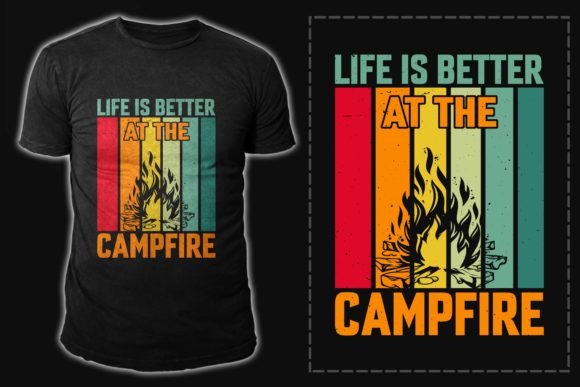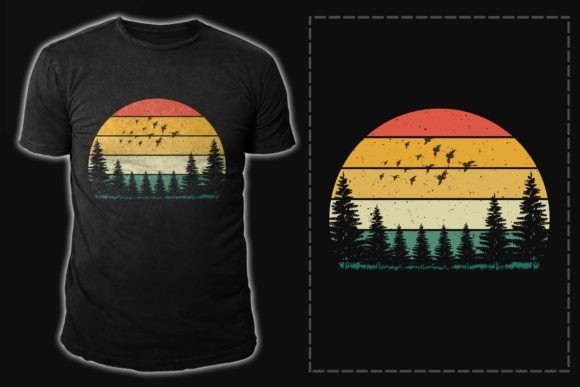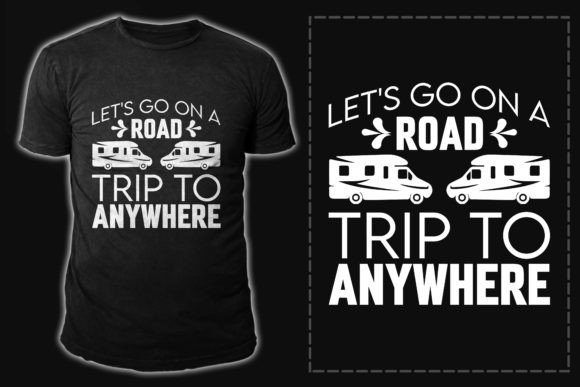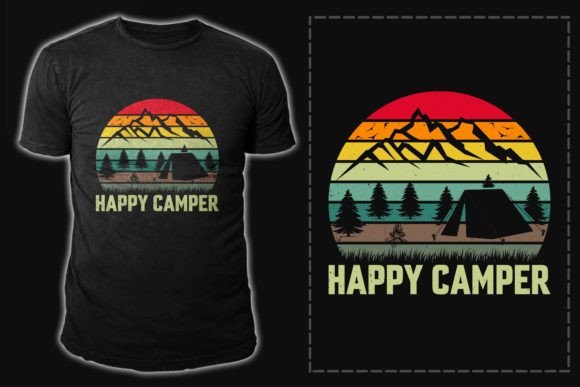
Camping Adventure Outdoor Camper T Shirt
As someone who’s stitched hundreds of designs onto everything from organic cotton onesies to heavyweight denim tote bags, I opened the Camping Adventure Outdoor Camper T Shirt files with a quiet kind of curiosity—not hype, not skepticism, but the steady attention you give a tool before trusting it in front of a client.
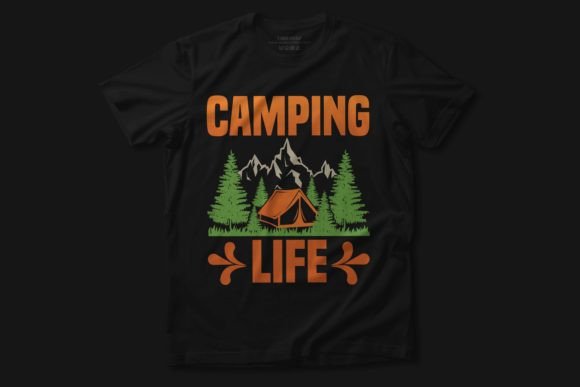
First impression? It’s warm, grounded, and quietly confident. The layout leans into friendly rustic charm: a centered camper van silhouette with subtle pine branches framing the sides, paired with clean, slightly rounded typography that reads “camping life” in an approachable, hand-drawn-but-polished way. There’s no frantic energy here—no over-the-top flames or exaggerated shading—just balanced negative space, consistent line weight, and a visual rhythm that breathes well on fabric. That matters more than most designers admit when choosing T-Shirt Designs for embroidery.
Last week, I used this design to embroider a set of linen tea towels for a local boutique’s summer launch. Not on a t-shirt—on something far less forgiving. Linen shifts under the needle, frays at edges, and shows every stitch density quirk. The Camping Adventure Outdoor Camper T Shirt held up beautifully: the van outline stayed crisp, the lettering didn’t collapse into mush, and the overall scale felt intentional—not too sprawling for a 4×4 hoop, not so tight it lost its personality. Customers loved how it looked both handmade and professional, like something you’d find in a curated cabin shop, not a mass-produced print.
This isn’t just a graphic—it’s a machine embroidery design built for translation. The vector files (AI, EPS) let me adjust proportions without pixelation; the high-res PNGs made mockup prep fast; and the transparent backgrounds meant I could drop it straight into my digitizing software without cleanup. Because it’s 100 editable and 100 color changeable, I swapped the forest green van roof to burnt orange for a fall-themed sweatshirt run—and kept the same stitch logic intact. That flexibility is gold for Etsy sellers and small shop products where seasonal variation drives repeat sales.
Where does it shine brightest? On medium-weight fabrics with gentle texture: cotton twill aprons, fleece-lined hoodies, canvas tote bags, and unbleached baby blankets. The design’s moderate detail level—clear outlines, open letterforms, minimal interior fill—means it stitches cleanly without heavy stabilizer stacking. I’ve run it on lightweight poplin (with tear-away + cut-away combo) and on midweight French terry (light cut-away only), and both came out sharp. As a personalized gift or holiday embroidery piece, it reads warmly—nostalgic but not dated, outdoorsy but not kitschy.
That said, use discernment on curved or layered surfaces. On a structured cap front, I’d simplify the branch elements or reduce their height—those outer flourishes can distort near the crown seam. And while the lettering is legible at 3.5 inches wide, don’t push it below 2.75 inches on a child’s cap or baby onesie unless you’re prepared to re-digitize for clarity. Tiny serif details won’t translate; this design works best when its relaxed confidence has room to land.
It also asks thoughtful choices around thread colors and fabric texture. On dark charcoal sweatshirts, I used ecru thread for soft contrast—not stark white—so the design felt integrated, not slapped on. On light natural fabrics, navy or forest green gave depth without heaviness. Because the file includes printable mockups, I tested those combos digitally first, then confirmed with a single-stitch test on scrap. That step alone saved me two re-hooping sessions last month.
For commercial embroidery, licensing clarity matters. The listing says “100 editable file” and “100 color changeable”—but if you plan to sell finished embroidered items *or* resell the digital files themselves, verify usage rights directly with the creator. I always do—especially when building design assets for long-term craft business use.
Here’s what I tell fellow designers and creative entrepreneurs: this isn’t a “throw-it-on-and-go” file. It’s a thoughtful embroidery file that rewards intention. Test it on your most common fabric + stabilizer combo. Check how the van’s wheel arches hold up in satin stitch. See how the “g” in “camping” reads after fill stitch compression. Run a black-and-white mockup to gauge contrast on both light and dark backgrounds. Then ask: does this elevate the finished product, or just fill space?
In my hands, it elevated. A customer ordered three embroidered pillow covers with this design for her son’s camping-themed nursery—soft gray linen, sage thread, simple border stitch. She sent photos: the stitching was even, the theme cohesive, and the whole thing felt like a story told in thread, not a logo stamped on fabric. That’s the difference between decoration and connection.
It fits naturally in custom apparel, yes—but also in embroidered patch form (I resized it to 2.5 inches for iron-on camp badges), as a focal point on kitchen towels, and even scaled down for a delicate baby bib. Its strength isn’t complexity—it’s cohesion. Every element supports the mood: unhurried, earth-connected, quietly joyful.
If you’re a handmade product maker weighing whether this Graphics file earns shelf space in your workflow: yes—if you value designs that stitch cleanly, adapt gracefully, and carry emotional resonance without shouting. It won’t dazzle with flash, but it will deliver consistency, charm, and real-world versatility. And in embroidery, that’s the rarest kind of magic.
- Always test the Camping Adventure Outdoor Camper T Shirt on scrap fabric before committing to a client project
- Review stitch density in your embroidery software—adjust fill angles if needed for fabric drape
- Confirm hoop size compatibility; standard 4×4 works well, but double-check corner clearance
- Inspect small details like branch tips and letter counters—they’re clear at recommended sizes but blur if overly reduced
- Use proper stabilizer: light cut-away for knits, tear-away + medium cut-away for wovens
- Check licensing before using in commercial embroidery or reselling as digital product